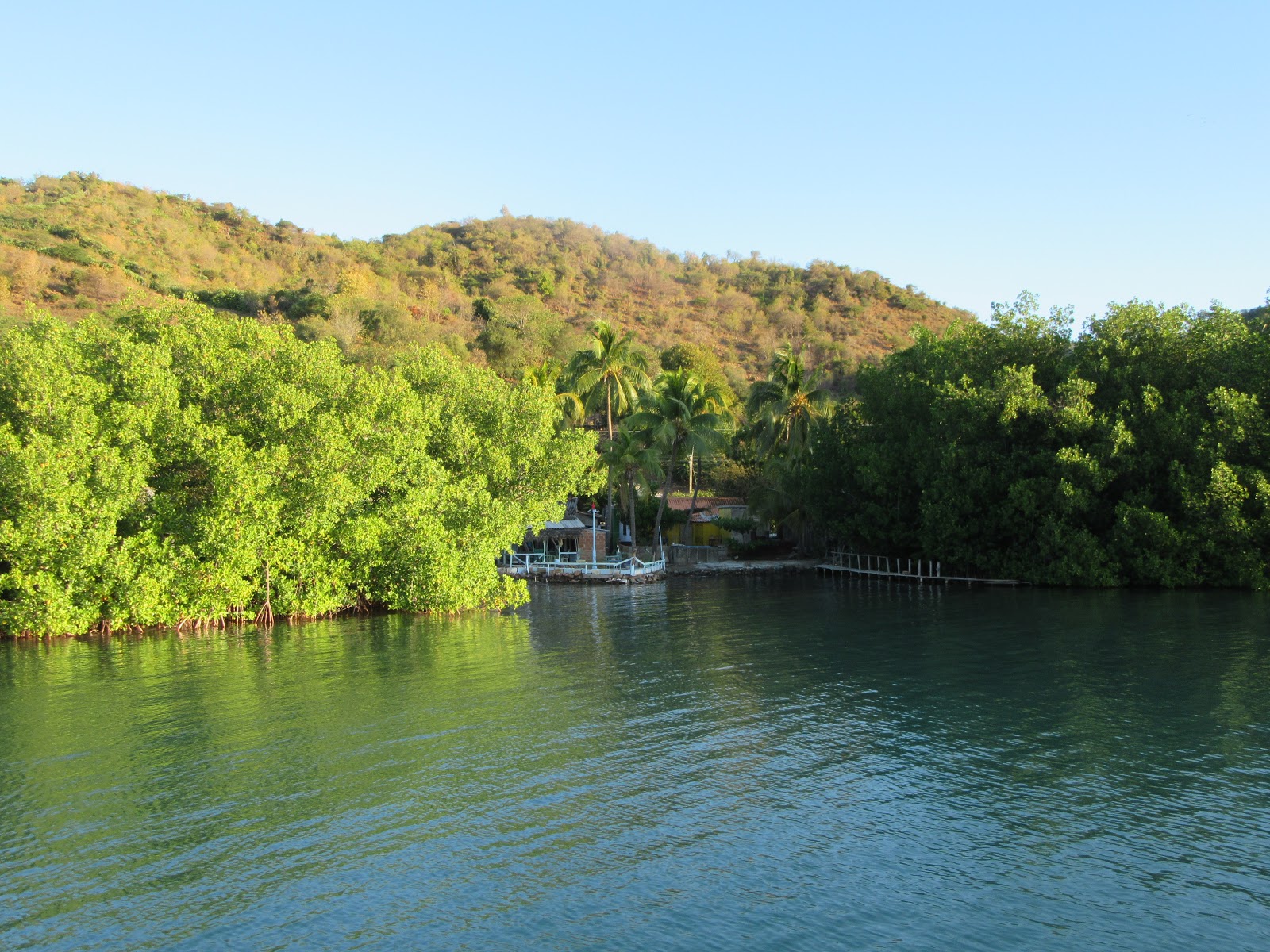
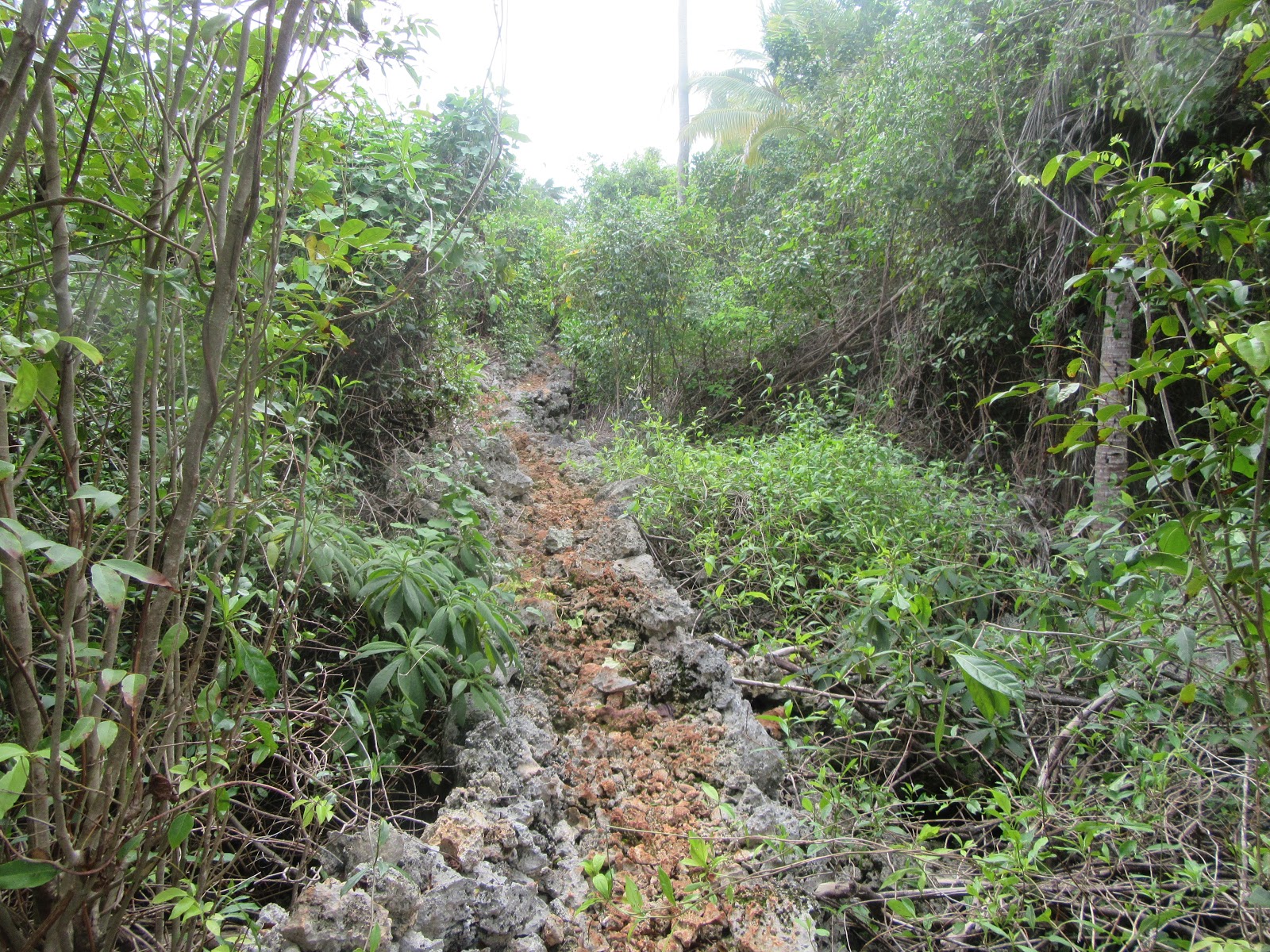
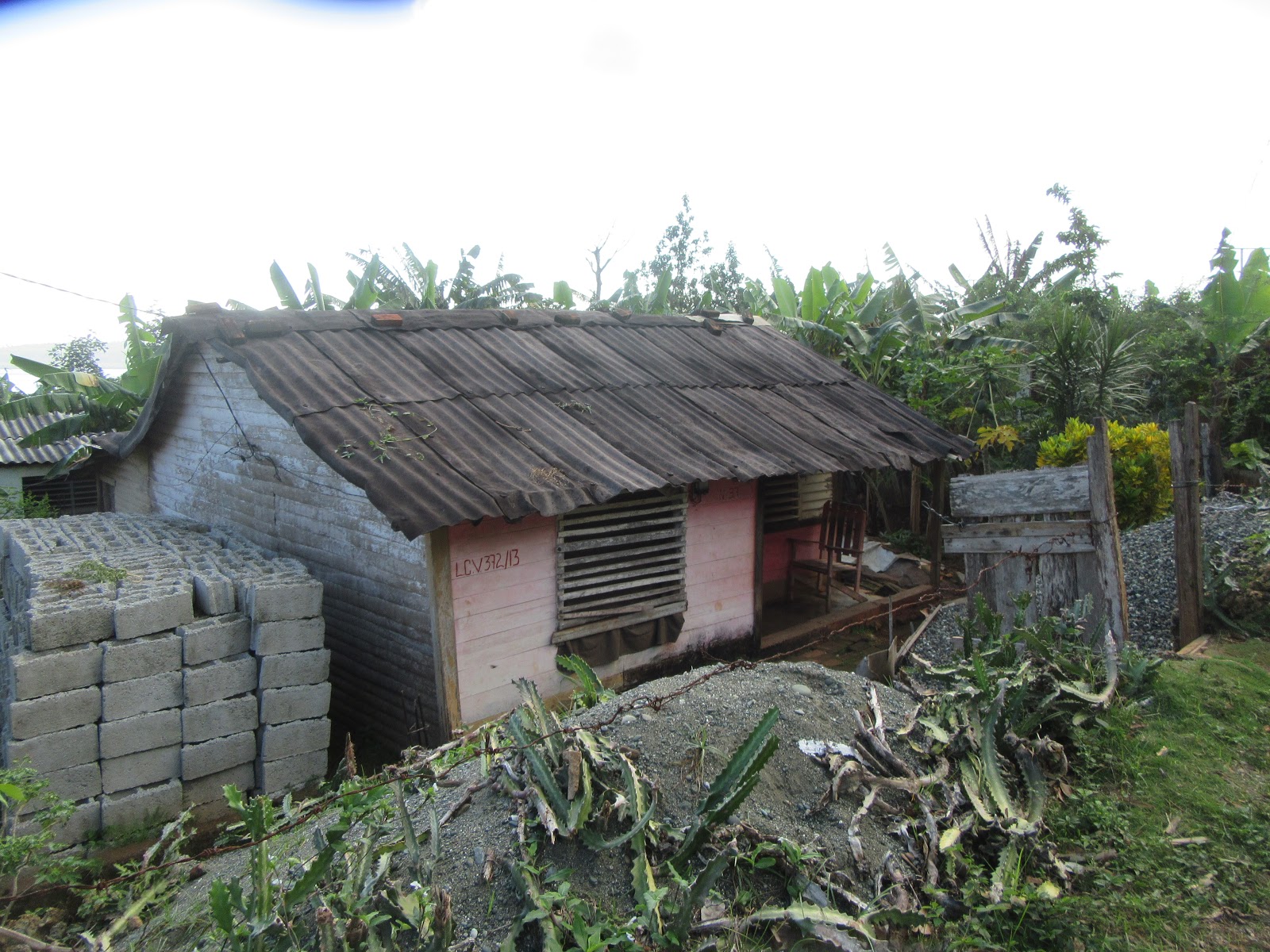
Wednesday, April 1, 2020

Elsie's Cuba diary - week 3


Friday 13th March
Up with the larks and the sails were out at 0745. Breakfast was had on the move as we slowly made our way towards Manzanillo, about 50 miles away. The forecast was slightly better today and with one reef in we beat into a force 3 wind. It was good to be sailing and not have to listen to the engine even if we were going into wind, not my favourite thing. We had decided to forego a day in Niquero and push onwards as we were hoping to get at least some fuel in Manzanillo. There was no fuel dock but if we could borrow a few jerry cans from the fishermen and get a lift to the fuel station in town we would at least have another 50 litres.

casting nets


Manzanillo sounded an interesting place. It was famous in Cuba for its French barrel organs and they had a pig roast, music and dancing every Saturday night. There were some historic sites to go and look at and of course they had shops which sold fresh produce which we desperate to get. Last but not least Manzanillo is the home of Pinellas distillery which makes and sells its own brand of rum. It was rumoured that a bottle of rum could be obtained here for 1 CUC if you bring your own bottle. I had been saving up my empty bottles and now had 4 for this purpose.

After lunch, Lionel got an AIS target on the nav screen. It was Zwailer whom we had not seen for over a week so he called them up and got some very bad news. They had not been allowed ashore in either Niquero or Manzanillo being told to head to Cienfuegos International Marina or any other Port of Entry. Corona Virus had stuck Cuba and, with three known cases in Havana, boats were only allowed to dock at Ports of Entry. That explains why the crew on Wild Iris were not allowed ashore. Zwailler had family visiting at the end of the month and they were hastily making their way to Cienfuegos to find out what was happening and to inform their family. We had no pressing engagements so made the decision to carry on and act stupid when the Garda refused us to land. It sounded stupid as we all had not been near Havana and had been in Cuba for over a fortnight. But their country, their rules.

heron? fishing


We arrived in Manzanillo at 1730 and dropped anchor near the Garda office so they did not have far to row out to us. The Captain contacted us by radio and asked all the relevant questions but did not say if we could land or not so we got ready the dinghy. Just as the outboard was secured an old fishing boat approached with five men it, one of which was wearing the olive-green uniform of the Garda. He had a medical mask and disposable gloves on. He came aboard while the others chatted excitedly in the boat alongside. The boat had an engine, of sorts. It smoked a lot and made a put-put noise. They didn’t have the safety equipment so couldn’t get close to us in case they caught the virus. He explained in Spanish we could not land and we must make our way to Cienfuegos. Lionel argued that we had not been in contact with anyone from Havana and had been in Cuba for more two weeks so it was impossible for us to have the virus. He sympathised but stuck to his guns. I thought about turning on the tears as we were running out of food, fuel and water but decided to try humour instead and made out I was upset that I couldn’t get any of their world famous rum and could he try to smuggle some aboard as a huge favour for me. He smiled but that was it. He got permission from the Captain to stamp us out for tomorrow morning so he did not have to come out again.  When he boarded the little fishing boat, we realised why there were four men in it – it took that many to start the engine, which was an ancient single cylinder diesel – one to hand crank it; one to lift the de-compressor; one to dribble petrol into the air intake and one on  the throttle.  When, at the fourth attempt, they got it started, the whole boat disappeared in a cloud of blue smoke.  Li reckoned that the engine had not had new piston rings since 1959. We clapped and waved.

It was a huge disappointment. Lionel tried looking up bus timetables but it was nigh impossible to get to this coast from anywhere we would be. We discussed all our options and came to the conclusion that because this was a once in a lifetime trip we would continue sailing round the islands until we ran out of food and water then make our way to Cienfuegos and take the consequences when we arrived there. As the crow flies there was 212nm miles to Cienfuegos. We had three quarters tank of drinking water and about the same for washing which could be topped up with rain water if it ever rained this month. The diesel tank was half full so we had to sail at least half of these miles. We do like going off track and this would definitely be against what the Cuban authorities deemed correct.

Saturday 14th March
Happy birthday baby sister, 51 today. We don’t have internet but I did remember, honest.
Lionel had spotted a potential anchor behind a reef about 25 nm away so we headed for it first thing. The weather seemed to have developed a pattern in this area where there is wind from about 2000 at night to 1400 next afternoon then dies till the evening so if night sailing is to be avoided early morning sailing it is. We thought that each day we might get five or six hours of good sailing then when we anchor to make sure we had good shelter from the North East. Good theory. The wind died very quickly around 1230 but it was ok, we had made good time and had reached our unnamed anchorage by then. It was named Bajo Rubi Martes and Li christened it by swimming out to inspect the anchor which he could not see because of the cloudy water. Mangroves give the water a brown tinge and the nutrients from them make the water cloudy.

beautiful sunset


After lunch and a spot of sun bathing in the hammock we went out in the dinghy to inspect the reef and see if we could spot any lobsters which could be hooked from under their rocks by a sharp object. Nothing was found and the reef turned out to be a shallow area with some soft corals and an abundance of giant red starfish. It was very hot so I hid in the salon and played sudoku and read while Li sat under the sunshade and read his book. Dinner was chilli and I had soaked the kidney beans overnight but they were still hard after an hour of boiling so we reverted to the old favourite of bacon and eggs with a dollop of tomato ketchup on the side. Five of our twelve precious eggs used. Oh dear.

Ruby anchored in Rubi Matres

Sunday 15th March
Today’s target was either 12nm or 25nm away. The wind had been blowing all night so we put the first reef in and sailed away in a north easterly force four towards our first choice. The wind quickly veered to the east and slowly dropped as we approached Cayo Rabihorcado. We dropped the sails and followed the authors detailed instructions. It looked delightful with a large expanse of sand on the lee shore which we were hoping to get over to for a walk. However, it didn’t work. We suddenly hit a shallow patch and Lionel quickly reversed and got back into deeper water. We go aground in 1.5 metres (we know this by experience) and the depth sounder had read 2metres. A bit too close for my liking and when Lionel asked if he would try again to get to the anchorage I answered no so we pulled away, raised the sails and started off to our second choice, Cayo Media Luna, Half Moon Bay which turned out to be an easy entrance and by 1300 we were anchored and tucked in behind a Cayo of mangroves, close enough to give us shelter from the nightly winds but far enough away the bugs hopefully could not reach us. A lazy afternoon of music, reading and catching up with the blog was had. Chilli for dinner.

I couldn’t help reflecting on the other Half Moon Bay we had visited in The Bahamas. That bay had been full of huge liners and thousands of people enjoying their day on a deserted island, swimming, paddle boarding, dingy sailing and horse riding with a few other people. In the Cuban version, us, sea, mangrove swamps and a few sea birds and millions and millions of stars. I wonder which one I preferred?

baby mangroves

Monday 16th March
A 23 nm passage today to Cayo Granada. The sailing was completely down wind so we floated along with jib only at a reasonable speed and got there under 5 hours. The Cay was covered in more mangroves with nowhere to land the dingy so no walk today either. An afternoon of reading and listening to music. Lionel took it upon himself to bake some brownies and flapjacks. Neither of us have got used to the temperature settings of the new oven and now we are using a butane instead of propane the gas is burning even hotter but the baking results were good and it will keep us going in treats for a day or two. Instead of buying raw ingredients we had bought a few ready-mix cake mixtures by Betty Crocker, USAs answer to Angela Lawson we believe. We are still using grannies Anzac recipe for oatmeal cookies but have started to make then in a slab and cut them up like flapjacks. The lack of thick syrup makes them rather runny but the Barbados syrup gives them an interesting taste. I hope granny approves.

almost sand in the mangroves


Tuesday 17th March
Our destination for today is Cayo Chocolate, so called because of the brown deposits of sea grass on the shore. The pictures in the cruising guide show a child frolicking on a beach so we had high hopes for a walk. 35nm later, some of it done under cruising chute with it poled out we had a disappointment. The beach was a few yards long and not really worth launching the dingy for.

Most of these short passages have taken us through deeper cuts in the shallows which the Cubans call Canals. They have imaginative names such as Canal de Tunas, Canal de Breton and one of my favourites, Canal de Chinchorra, it just sounds wonderful. The chart shows navigation markers of green and red but most of them are missing and the ones that are there are usually rust or white coloured – age and birds- so it pays to concentrate. The depth can change very suddenly as well and even the sonar charts cannot be truly trusted. Sand bars shift. The local fishermen don’t seem to have the same problems and we have seen them happily going over banks which our chart says are less than half a metre deep.
No chocolate was found so a packet of mini Snickers was dug out of stores and enjoyed.

tiny fish

Wednesday 18th March
Washing water was becoming worrying low and we needed an internet fix. Lionel downloads a digital copy of The Spectator every week to keep himself informed on what is happening in the UK and it was almost two weeks since he got a new copy and we were quickly running out of Archers episodes – is Linda still alive after Grey Gables explosion? Tonight’s anchorage was in the National Park, Los Jardines de le Reina, named by Columbus for his Queen, Isabella. There was reportedly a floating hotel with internet. We were also intending to ask for 2 jugs of water, about 45 litres, which will keep us going for another 4 or 5 days. We might even splash out and pay for a meal if they serve non guests. Our destination was Canal de Caballones a mere 18nm so we left after 0800 and sailed downwind with the Jib only. We glimpsed a moored boat in one of the small bays which we rightly identified as the floating hotel. Lionel decided to anchor in the Canal instead of the marked anchor to cut down the dingy journey. The wind was still blowing so the channel was quite rocky but soon calmed down after lunch and we launched the dingy, put on more respectable clothes and made our way to Tortuga Jucaro, the boat which was used as a hotel for the well-heeled guests who came here to dive and fish under the supervision of the resort manager and his staff. We knew we were not allowed to dive, snorkel or fish here. The reason was a mystery as most cruisers are well aware of how to safeguard the marine environment. “Leave only footprints, take only photographs” is the slogan posted on most marine park beaches and Websites but their country, their rules.

coconut fish


The floating hotel was a rusty old boat that obviously had been moored in the bay for a very long time, surrounded by other smaller similar crafts which we presumed were staff quarters. There was a wooden jetty on the port side of the approach but we thought we would probably get a better response if we approached the main boat. The stern of the boat was set up with table and chairs for guests to lounge in after the days’ activities and as we approached there didn’t seem to be any staff in evidence just some English and American people getting ready for a dive. To say they were not too friendly would be an understatement. I felt like a Pariah. One woman in particular, looked down her nose as she answered Lionel’s question about where were the staff and answered with a sniff and comment that they had all been tested for Coronavirus and she didn’t think we should come aboard because we hadn’t been. Fair comment but she could have got up and gone to look for a member of staff who would have helped us instead of carrying on with her conversation and occasionally glancing at us if we were bad smells. At last a lovely lass came and explained that we could not come aboard for the reasons mentioned already. We understood the concern but asked if we could have some water. At first, she was very reluctant and said we would have to wait for the resort manager to come back but when she saw we had our jugs with us she happily filled them and sent us on our way saying we could expect a visit from Jaime, the manager. There was no internet. We left them to their holiday which allegedly cost about $3000 per person.

On return to Ruby we filled the aft water tank hoping that when Jaime came to visit, he might give us some more water. The beach looked very inviting so we went for a walk (me), stomp, (Lionel). He needs to walk fast to burn off energy and get his muscles working. I just stroll along and enjoy the feeling of terra firma. We saw a speed boat approach Ruby and circle around her. Our frantic waving from the beach attracted the occupant’s attention and we met Jaime, the resort manager who explained he needed to take a picture of Ruby’s ID number and send it to the authorities to verify we were legally in Cuba. He also repeated what we already knew, no fishing, diving snorkelling or visiting the hotel and he suggested we move around the corner into the designated anchorage after our walk. We agreed and parted on good terms.

beach walk

As he suggested we moved into the anchorage after our cup of tea and brownie. Surprisingly there was what seemed like mooring balls and after some investigation we deemed they were safe and secured to huge concrete slabs on the sea bed and prepared to tie up on one. Now, in my experience there are two types of officials in Cuba, ones who will say anything that you want to hear and make you happy (rather sleezy in my opinion) and ones that shout and point and will not deviate from Party Policy. At the moment we were trying to tie up to our chosen mooring ball we were approached by a boat containing some of the latter. Lionel, quite rightly, asked them to back off and we would talk to them when we had secured Ruby to the ball but they still insisted he give them their full attention so we aborted our mission and asked them as politely as we could what they wanted. The interpreter, not the official in the uniform, took charge and told us we could not anchor here we must tie up to a mooring ball, we cannot do any activity of any sort and we must leave first thing tomorrow morning. He seemed to think he was doing us a huge favour letting us rest for the night. I tried to tell him we had already spoken to the resort manager and had he had Ok’d us to stay for a couple of days and let us walk along the beaches. This made it worse and he demanded to see our cruising permit which had not been stamped since Manzanillo where we had been told to go to Cienfuegos which we had decided meant as long as we were going in that general direction, we would be OK. This shouty man told us we must go directly to the city tomorrow. He looked at our documents. I’m not even sure he gave them to the official inspector and seemed satisfied but insisted we tie up to a mooring ball and not anchor. What did he think we were trying to do when he approached us, but I held my tongue and smiled, something I must try to do more of in this country?
We successfully tied up to a ball and got the dingy back onboard as it looked like no more beach walks here. The small boat with the official hovered about a half mile away watching to make sure we did as we were told. He obviously had missed the customer service course in his training.

hotel clients being taken to diving site, note the speed

Thursday 19th March
Just for the sheer hell of it I was going to suggest making it a very late start this morning but I didn’t and we set off for Cayos Cuervo with two reefs in the main sail and a scrap of jib out, it was beating into a force 4 to 5 NE wind today. It would be worth it. We had been reliably informed this anchorage was where the shrimp boats congregated and the fishermen would exchange some of their catch for coffee, lip balm, T shirts or anything else you had to exchange. I could taste them already, prawns dripping in garlic butter on a bed of noodle and maybe a curry the next evening. It was only 18nm today but as we approached our preferred spot nothing seemed to be the same as on the chart. Yes, sand bars moved but wrecks and pilings don’t. A navigational post marked the end of a long sand spit which was clearly visible from the end of one of the mangrove cays.

navigational pile

 Lots of birds were flying around and some came hopefully towards us. Obviously, the fishermen fed them and their reaction to a boat was to fly towards it for food. They were disappointed. We anchored, had lunch and went for an explore in the dingy, having a ten-minute walk on a bit of sand the mangroves hadn’t covered yet and going around the pilings which seemed to have a skeleton of a wreck attached to them. This must have been one of the fabled fishing stations that the cruising guide talks about but which we have never been able to find. A quick blast round some of the mangrove swamps, they were becoming ten a penny to us now and an investigation into another wreck which looked like it had a cannon on top of it but Lionel maintained it was an old engine block which was all that was left of a once proud ship then back to Ruby and the long wait. Yes, you guessed it no shrimp boats tonight and we had vegetable stir fry instead. Tinned vegetables with fresh onion and garlic.

another cay

Before bedtime we went up to look at the stars. Fantastic. I actually saw the whole of Orion for the first time in my life. I could always see the belt and sword but could never pick out the head and shoulders but the sky was so clear tonight that after ten minutes the milky way was there, with The Plough pointing to the Pole Star. Some people would freak out being so far from civilisation that there was no light pollution in the night sky, we love it.

Elsie's Cuba diary - week 2

Moon rising over a Cuban village

Friday 6th March
Today was designated a rest day. After all our activity over the past week I needed time to catch on the mundane things of life – wash my hair, clean the toilet, sweep the floor, get the laundry done – all the things that make living on a yacht the same as living in a house. We were still on the dock, making it easy to get ashore and hand in laundry to Rosa and have an hour of internet in the hotel. We met Mark and Lisa from Wild Iris. They had arrived on Wednesday from Puerto Rico and were off to the big city to have a look around and catch some Jazz at The Iris Club. We will catch up with them tomorrow.

Jose Marti


Before lunch we went back out to anchor and were welcomed by the blast of loud music from the café ashore. Great. In the afternoon we pottered around doing little jobs but mostly reading and listening to radio. Sundowners were inside as the mossies were out in force and dinner was left over bacon, pasta and a jar of tomato sauce with some chopped onion – we really must do some shopping. Tomorrow maybe.

Saturday 7th March
Because we had been so lazy yesterday, we hadn’t even bothered to collect our clean laundry from Rosa, so first thing Lionel went to get it and to ask Pedro if he could get us a dozen eggs. He took our own boxes as the egg trays can be covered in ants and such like. Hopefully we will have at least eggs to eat on the next part of our next cruise.

ship entering the channel


We went over to Wild Iris to say hello and were offered a cup of tea. It was a good catch up. The idea was to catch the midday ferry into Santiago and have a look around the Agro markets, these are the fresh fruit and vegetable markets with small stalls and good prices. Mark and Lisa joined us on the ferry and as they had more or less the same idea we stuck together. When we found the first Agro market it looked good – lettuce, cucumber, tomato, melon, pineapple, potatoes, beans and all sorts of exotic things which I don’t know the names of were for sale. The stall holders seemed to be saying the market was open till midnight. Good. I didn’t fancy carrying a fortnight supply of fruit and veg around the town, so the idea was we would come back once we were ready to go back to the boat and buy then. The second one we went to was closed but would reopen at 6pm

Cemetary

That done, the next thing on the list was to visit the cemetery where Fidel and his band of brothers are buried. On the way we passed a local outdoor café and decided a quick bite to eat was in order. It was busy so when two guys asked us to join them, we sat down. In the middle of the table was a large stand with a 3-litre beaker of beer on it. We were given plastic cups and told to drink up. Lionel and Mark got stuck in. I had half a cup and decided it tasted ok so filled it up again. Lisa declined. She found the local beer rough but they didn’t seem to sell anything else. We also ordered fried chicken but after an hour, Lionel had bought another 3 litres of beer to keep us all going, it hadn’t appeared. We queried it with the waitress and I think there had been a misunderstanding and our lunch appeared ten minutes later. It was OK but not as good as last Saturdays from the street vendor. After we settled up and I went to the toilet, deciding I wasn’t that desperate we continued our walk to the cemetery, a little slower than before but we got there eventually.

The official name is Cementerio Santa Ifigenia and it was created in 1868 to accommodate the victims of the War of Independence along with the people who died of an outbreak of yellow fever around about the same time. There are many famous people buried here but the grave I most wanted to see was Fidel’s. His was a simple boulder with his name on it. Very simple which is what he asked for. After he died his ashes did a cross country procession that recreated his victory march of 1959.

Fidel's grave

He was interred here on December 4th 2016 alongside his own hero Jose Marti, the hero of the Spanish/American war. Marti’s monument is far more imposing with a huge mausoleum guarded by three soldiers and a hexagonal coffin draped with the Cuban flag.

Marti's grave

The Guard gets changed every half hour. During the ceremony everyone else is shepherded into a little compound where we solemnly watched the precise marching and eloquent ballet of the troops.

Precise marching

 On our way out of the cemetery Lisa remarked it had made her think of John Cleese’s ministry of silly walks. I was glad she hadn’t said that during the ceremony, I think I would have been thrown out for giggling. There were many other graves depicting the last resting places of the great and good of Cuba.

Bacardi grave

The Bacardi family were very prominent and a huge wall was detected to all the men and women who had been killed in the Revolution.

Wall of Rememberance

An eternal flame burnt to commemorate all the Cuban lives lost during those two conflicts. It was rather strange being directed along the “official” pathways by security but Fidel and Marti are treated like Gods in this country so it shouldn’t surprise me.

Eternal flame

It had started to rain by now so a taxi was sought and found very easily to take us into the centre of town. A bank was needed so we got out at Parque Cespedes. It was too late now to visit the Cathedral and the Rum Museum so we all headed up Plaza de Marte where the food stalls and party is on a Saturday evening.

Local Oyster Drink

The Moncada Barracks are also up this way. This is where a young law student Fidel Alejandro Castro Ruz and his 116 handpicked followers stormed this large military barracks and started The Modern Revolution in 1953. He picked July 26th, the day after Santiago’s annual carnival when both the police and soldiers would be tired and hung over. It didn’t go well and the attack lasted all of ten minutes, with five rebels shot dead with the rest escaping into the mountains where Fidel was captured a few days later. He was spared execution due to the public revulsion over other brutal executions and lived to fight another day. I bet Batista rued that day the rest of his life.

barracks with bullet holes

The rain had put out most of the barbeques so cooked pig and chicken were in short supply. We managed to buy a scrawny half cooked chicken for 3CUC, two meals worth we reckoned. Lionel spotted a shop with a carneceria (butcher) sign above the door. He went in to investigate but was told the produce was only for citizens with ration tickets so came away empty handed which was a disappointment.

Moncada barracks

The rain started and we decided it wasn’t an evening for listening to music and dancing so we headed back down the hill to one of the Agro markets which we spotted earlier. It was open and milling with people buying their weeks supply of vegetables. These markets are not self-service and there seemed to be a lot of haggling going on about quality and price. I stood in a queue for about ten minutes. Now a queue in Cuba may just look like a rabble of people to me and you but there is structure in it. When approaching the rabble, the question you ask or shout is “Quien Es el Ultimo?” or “who is last?”. The last person in the queue raises their hand and you stand behind them. Phew you’re in the system now but you must listen carefully for a person asking the same question and you indicate you are last then you can relax. It may look like people are leaving the queue or pushing in front but they wander off and look at something else or go and have a chat with their friends but they will return when it is their turn to be served. Complicated but it works. I realised there was only one or two things that I wanted and the wait was not going to be worth it. Lionel went around the corner to the other market but it was closed even though we understood it was open to midnight – must brush up on Spanish. The decision was made to return back to the boat and we got a non-descript car back. I reflected on the way home that the lack of fresh fruit and vegetables was not a huge problem. This is why we had stocked up on so many tins and dried goods and we were very unlikely to starve in the next two weeks. There was also a pack of vitamin pills in the head cupboard which was still full after almost five years travelling.

We made a detour to Pedro’s to collect eggs which he hadn’t got yet. On impulse we gave him a list of fruit and vegetables to buy for us as well along with some money, the Cubans do like the money upfront and we trusted Pedro to a certain extent. The items were carefully written down and I for one felt slightly better in the knowledge that this expert was going to negotiate the markets instead of us getting up to catch the six o’clock ferry tomorrow morning. A long lie……maybe if the music didn’t start too early.
Rainy Plaza

Sunday 8th March
Sunday was a rather frustrating day. We had hoped to be leaving Punta Gorda today but because of the fresh food situation we had to stay. We got up at our usual time and while sitting at breakfast Lionel happened to glance at the time on his phone. It was an hour later than we realised but the ship’s clock still said the time we thought it was. Daylight saving had come to Cuba and no one had told us. After breakfast I wandered up to the hotel to get some internet and was told it was off as the area was experiencing short power cuts. Another disappointment. There had been talk of taking the ferry over to the outside shore and having a walk but neither of us could drum up the enthusiasm so the rest of the day was spent reading, writing and listening to some radio. Lionel went ashore to pay our bill of 375CUC, booking in to Cuba, visitors visas, boat visa, four nights on the dock and six nights at anchor. Yes, we had to pay to anchor. On the off chance we wandered back down to the hotel and low and behold the internet was back on so we had a fix of emails, Facebook and other stuff. I had made a list of places and anchorages we would like to stop in but the Port Captain wasn’t there to confirm or deny where we could or could not stop so that was another job for Monday morning. Now, all we needed to do was collect our fruit, vegetables and eggs from Pedro after we had dinner with them which I had eventually agreed to. I dug out a bottle of wine from the bottom of our spirit store. It’s amazing how rum has taken over from wine as our preferred drink, nothing to do with the price comparison of course. I also took along a set of colouring pens for Pedro’s grandson and a vest top for Rosa who had asked me yesterday if I had any old bras that I could give her. She said she had only one fairly washed out one. I didn’t have any bras but thought a top might be well received.
Dinner was different, that’s the best way I can put it. The food was good and we each had a glass of wine which I realised we shouldn’t have opened as they didn’t seem to enjoy it and it was probably earmarked to sell. During dinner there was no conversation. It is very hard to talk with a television blaring and your hosts attention on the news program. Very bad manners in the UK but it seemed to be the Cuban way. A power cut struck as we were finishing dinner and the TV went off and was not switched back on, thank goodness. It’s amazing how we have come accustomed to no noise in the background except wind and weather. At last we asked for the supplies he bought for us today at the market. He didn’t manage to get everything and he had lost our list. I could almost see steam coming out of Lionel’s ears. He gave us what he had, no eggs, and promised us he would get the eggs tomorrow. It being Monday I doubted that very much as the markets and shops are all closed. We left feeling let down. That night the decision was made we were going tomorrow at 8am no matter what.

El Morra

Monday 9th March
Excitement on Ruby Tuesday. We were going somewhere different, away from the loud music which blared morning, noon and night from the small shoreline café. Away from the smoky atmosphere caused by the chimney belching out smoke 24 hours a day.  Up and ashore to get our cruising permit from the Port Captain. First of all, we had our final fix of internet and got our eggs from Pedro but no melon or oranges. Then we saw the Port Captain and through a few hand signals and eventually translations from George we discovered there were hardly any restrictions on where we could anchor but going ashore was restricted to where there was Guardia stationed. The cruising permit was a piece of paper with a series of boxes where the Guardia stamped you in and out of each port/anchorage. It looked simple.
wall mural

At 0820 we weighed anchor and we were off. It felt good to be out on the water again. The wind was fickle, sometimes we had 20 knots other times it was 5 so progress was spasmodic. The shoreline was very mountainous but a road ran along the water’s edge. It would be a great road trip to drive along this countryside but rental cars are rare and very expensive in Cuba. Our destination today was Chivirico, a tiny fishing village with a tricky entrance. It is a bit disconcerting when you are entering an anchorage a fisherman is standing in two feet of water 20 feet from the boat but we did not balk and carried on.


Thatched cottage

We could anchor there but couldn’t go ashore. The Guardia was supposed to row out and stamp the cruising permit but we saw no official. The village was picturesque in a way, others would say it was a collection of shanty huts but everyone seemed happy enough. Roast chicken, potatoes and salad for dinner. The six tomatoes that we bought were fairly ripe so the plan is to eat them as quickly as possible, managed to get through two today and they are big. Happy captain and crew tonight, we are back on the move and NO loud music can be heard.

house by the sea

Tuesday 10th March
A longer passage today, 48nm, and no real wind forecast. We were hoping for some wind off the hills but it didn’t happen and we watched the clouds forming over the high peaks telling us that the mountains were sucking the NE wind into themselves before it reached us. It was motor sailing most of the way but the scenery was spectacular. The Sierra Maestra mountain range is some of the highest mountains in Cuba and is where Fidel and his band of revolutionaries hid whilst plotting to overthrow the Government.

Fidel's hideout

You can visit his hideaway high up in these mountains but I think it would be a strenuous climb for the last bit, the road only goes up so far. We trailed a fishing line most of the day but with no luck. In the shadow of this mountain range there is supposed to be lots of tuna, wahoo and mahi-mahi but it looks like we will have chicken stir fry tonight.

sea view

Our destination, Marea del Portillo (Tide of the Pothole), was an easier entrance and we anchored surrounded by mangroves with a tiny fishing village tucked into one shore. The small hills on our bow looked like giant sand dunes in the afternoon light.

Sand dunes?

The only concession to the twentieth-first century was a hotel complex at the mouth of the bay which was reported to have internet coverage.

posh hotel

The cruising guide told us we had to go ashore and make ourselves known to the local Guardia which we did but got chased as we were landing. The Guardia come to us so back to the boat, dingy back on board and sundowners poured. Explanation may be needed. The Guardia is the Cuban officials’ foreign boaters have to report to everywhere there is a town. We believe, and it may be wrong, that if there is a Guardia station we are allowed to go ashore once we have checked in. If there is no Guardia stationed, we can anchor but not go ashore. That is our interpretation of the law. Eventually a young lad rowed out and came aboard, had a beer asked Lionel lots of irrelevant (well I thought they were) questions and left with our cruising permit saying we would get it back tomorrow before we left. He assured us it would be back by 0800.
beautiful garden


The bay is magnificent and we watched the setting sun with the last of our drinks. I noticed a very steep road climbing up the slope of a high mountain and Lionel (with the help of his downloaded Windy maps) confirmed it was a road but I still haven’t seen anything trying to go over that pass. Maybe it’s the horse pass. I wouldn’t want to cycle up it and I can’t see many of the vehicles we have encountered make that gradient. By now we were slightly concerned with the amount of diesel we were burning. There are a lot of shortages in Cuba and one of the most prolific ones is fuel. We might get fuel in Manzanillo, 80nm miles away but if we don’t the next fuel stop is Cienfuegos probably 200nm miles so it was a concern. Never mind, tomorrow is another day and we would worry about it then. Tonight, we were in a beautiful bay with lovely surroundings and the mozzies were starting to bite. Time to close the hatches, have dinner and sleep.

dawn

Wednesday 11th March
George appeared with our stamped cruising permit before 0800. I felt a bit bad as he had rowed out to the boat and we had changed our minds and decided to stay for another day. He didn’t seem to mind and went away again with a happy smile.

dirt road through the village

 After breakfast we unleashed the dinghy and made to shore. The fishermen had a docking system which consisted of two poles and a dock. The idea was to tie your bow to one pole then fall back and secure the stern to the other. Simples. It took us a while to get the idea and when we were secure Lionel could not find his shoes so he motored back to Ruby where he still couldn’t find them. Lo and behold they were lying on the first dock we had tried to tie up to. Eventually we stepped ashore and George met us with a smiling face and informed us he could supply vegetables, fruit and fish if we needed it. This was a big bonus as we thought the next food stop would be Manzanillo. We explained that we were going for a walk and when we returned, we would visit him in the white house by the shore. More smiles.

Village school

Instead of taking the dinghy to the dock by the hotel we had decided to walk around the bay to get to the hotel and some internet. The walk wasn’t that long, maybe two miles, through some pretty rundown villages and isolated houses then we hit the main road, more potholes than tarmac. There was a Government run banana plantation on the way which had its own security guard and a dry river bed.
Government banana plantation

The first hotel we visited was very plush with swimming pool and tennis courts, obviously for tourists as I couldn’t see the Cubans, we had met playing tennis or swimming for recreational purposes. They had internet but we had to use the cards they had for sale and they didn’t have any left so it was on to the next hotel which was even bigger and even plusher. Lionel bought two cards and I was told to fill my boots as we didn’t think they would work anywhere else so we both had one hour of internet. What a treat. It was a nice surprise to learn the cards were still 1 CUC each. The hotel wasn’t trying to make a profit. I checked emails, Facebook and Trusted House sitters then started to post pictures onto the blog that had been posted last week. It is a very time-consuming process and when the internet was interrupted by a power cut, I almost had a fit. I hadn’t saved as a went a long and if I closed down the page all my work would be lost. We patiently waited till the power came on again and luckily Lionel had still some time left on his card and managed to save my stuff. Phew.

Main road

We strolled back to Ruby, passing a small shop, Mercado Ideal Bodegas. Thinking it may have some fresh produce we went in but the assistant told us (we think) that this was only for Cubans and he couldn’t sell us anything. There was no fresh stuff anyway. On the way back we were stopped by a woman who wanted to trade small handmade souvenirs for soap. We said no thank you. I don’t mind the people who want to trade items or have something and ask for money for it but I do object when someone just asks for money.
pigs out for a stroll

We had a stroll around the village then stopped off at Georges house where we traded a hank of serviceable rope for two red snapper fish, and tomatoes. We were also offered peppers but declined as they were the little hot ones. He seemed perfectly happy with the trade but his hopeful son not so. He had a scuba mask in his hand and I think dad was supposed to ask if we had another one for him but the sight of the rope changed his mind.
thumbing a lift

Wild Iris had arrived and we went over and invited them over for a cup of tea after they had finished with the Garda. A good catchup was had. They were heading the same way as us but making different stops so we would probably see them along the way. In the late afternoon we decided to try our hand at fishing from the dinghy so we got everything out we needed, threw it all in the boat along with a couple of beers and went out to try our luck, first of all trying in the mangroves then over in the open water where the local fishermen were. No luck but we still had the red snapper for dinner which Lionel baked along with potatoes and Puerto Rico cabbage.

school bus

Thursday 12th March
The Garda delivered our cruising permit before 0800 as promised and we lifted anchor. As we were passing Wild Iris, they shouted that they had not been allowed to land at the village yesterday so were heading to Pilon today to have a look around. We couldn’t understand as we had no problem but the mystery would be revealed later on.
Dawn fisherman

Today was going to be another motoring day. The wind was forecast to be light and variable for most of the day but we were hoping there was going to be some land effect and we would get some sailing along this coast. We motored sail along to Cabo Cruz, the southern extent of the Golfo de Guacanayabo, and as we approached the Cabo the wind picked up and I think we sailed without motor assistance for about an hour but it died as suddenly as it appeared. Cabo Cruz was one of the anchorages we had considered for tonight but the decision was to go on to a little anchorage in Cayos Limones, approximately 10 miles further on.

 We had been trailing a fishing line for the past three days with no luck but as we approached the night’s anchorage, we got a bite. Lionel landed the fish no problems then we had a discussion about what type of fish it was. The problem is that large reef fish carry a disease that makes them poisonous to human beings so no one eats them. The most poisonous are Barracuda, large ones especially. This fish was either a barracuda or a Spanish maceral. Because we were not sure it got thrown back but after some research, I found a picture of a barracuda and it wasn’t one. Damn.
 It was an anchorage surrounded by mangroves with fishermen lurking in their rowing boats all around. A peaceful night was had but disappointingly no fish was offered to buy or swap.


Saturday, March 7, 2020

Elsie's Cuba diary - week 1


Cuba Diary


Friday 28th February 2020
Well, we are here, arrived at 0630 Cuban time after a four-day passage, two of which were great sailing, one was OK and one was wasting time so we could have a day light arrival but Lionel will write about all that technical stuff. Me, I am beyond ecstatic to be in Cuba. I have dreamt about visiting this country since I was a little girl and at last, I am here. Coming through the headland into the bay that is Punta Gorda was like entering a small Spanish harbour with a huge Spanish/Moorish castle on starboard and a small sprawling village made up of shacks and one or two larger more opulent houses on the port.

El Morro

The clearing in process took four hours from the first visitor, the doctor, to the last, customs. It was very quick and easy compared to what we had been led to expect. The doctor sat at the salon table, asked lots of questions and didn’t even look in our fridge, which I had scrubbed for the occasion. Next was a visit to immigration office where the officer was more concerned about learning the correct English phrases for his job. The highlight of the whole process was our lecture from George, the Dock Master. Very entertaining. He first informed me that although he was very handsome, he was happily married and didn’t play away from home so alas we could only be friends. Some of the information was straight out the cruising book but other stuff might prove useful further down the line. Lastly, customs boarded the boat, asked some questions had a quick glance around the salon and left with one of our little presents tucked discretely in their pockets. We had made up little bags with a bar of soap, a box of Aspirin and a pen to give to each of the officials. Not much to our standards but by the look on their faces it was enough. The lady customs officer got quite upset when she realised, she had no pockets in her short skirt and tight shirt. She tucked the pen down her cleavage and sadly handed back the soap and Aspirin but her companion stowed them in his already bulging pockets and they both left with big smiles.
After a ten-minute sit down, we left the dock and anchored in the designated anchor area. Something we are going to have to get used to, we can only anchor where the officials tell us to. Their country, their rules. As we were anchoring Jane and Richard from Zwailer, another OCC boat came over from the dingy dock to say hello and we invited them for a cup of tea and one of our hoarded oatmeal cookies. They had arrived three days ago from Jamaica so we got the low down on the city and how most of the time you stand in queues. We invited them back for sundowners in the evening. At last, sleep. Having not slept since ten o’clock the night before, I was exhausted but I woke up about an hour later full of beans.  We decided to tidy up, have lunch and then have a walk ashore just to stretch our legs. Although this port is called Santiago de Cuba the city is about ten miles away and the actual port is a sleepy little village called Punta Gorda (it is important not to forget the ‘n’ in Punta when giving directions to taxi drivers, otherwise you may find yourself with a fat prostitute). There is not much here – marina, very small shop, restaurants and cafes (with very loud music blasting out), hotel and Pedro and Rosa whom we met as we walked out the marina. Our first encounter with professional hustlers, very nice hustlers, but hustlers all the same. I agreed to bring the laundry over either Monday or Tuesday and Li agreed to let Pedro fill our cooking gas cylinders but other than that I think we got away pretty much unscathed. He offered us seven bottles of rum for fifty dollars but after Li had a taste we declined. I think paint stripper was mentioned. We took a stroll around the lower half of the village and found the things we needed to, the bus stop, (no regular buses), the ferry dock, (easiest and cheapest way to get to the city), the hotel (internet access), and the way back to the marina.

The Marina

Back to Ruby for some more sleep, Li, and for me to finish “The Old Man and the Sea” which was a short but most enjoyable read. I had another read of the information we had about the big city then it was time to do some socialising. What an enjoyable couple of hours we had talking with a lovely couple. Richard had also been in the Merchant Navy so the boys had a good gossip about their experience and Jane and I talked about family and some of our experiences in different countries. They have kept their house in Cornwall but did sympathise with our problem of moving back to dry land and deciding where to make our home. After living on Ruby for almost five years it is not an easy concept to live in one place and not be constantly moving but I’m sure we will resolve it eventually.
Dinner was a bucket omelette, exactly what we needed and back to reading the cruising guide. My eyes eventually got weary about nine o’clock and bed beckoned. Night.

First sunrise in Cuba


Saturday 29th February
Up with the dawn and a very grey cloudy dawn it was. Our first full day in Cuba and the decision was we would take the midday ferry to the “big city” and get the six o’clock one back. After breakfast I did a reccie of all electronics on the boat and gathered them together in one place. Between us we worked out what we needed to keep and what we could give away or barter. Sometimes it is very difficult to persuade Lionel to throw things away. “You never know when it might be useful” but I was ruthless this time and we ended up with a substantial amount of leads, plugs and wires and various electronic gadgets which might be useful to some enterprising Cuban.
Our first trip of the day was to take empty gas cylinders to Pedro to get filled. He asked for 20 dollars (equivalent) up front. We thought it would be no problem because his and Rosas reputation relies on us cruisers spreading the word and one negative goes a long way in our community. We also swopped two knackered mobile phones for two bottles of his best rum, which were slightly better than yesterday’s samples but not much. I think our rum purchases will be made in official shops. The cost may be ten times what it is on the black market but we won’t get stomach rot.
Back to the boat, cup of tea and a sit down and one last read of the guide book then it was time to go for the ferry. The crew of another boat had the same idea and we learnt that they had come from Jamaica and were on a two-week paying cruise to Cienfuegos. Most of them were experienced sailors who either did not have their own boat or wanted to experience a different sailing area. Some interesting people and stories. The ferry took us past the belching chimneys of the cement works and onwards to Santiago.


                                                       first glimpse of Santiago

This is a city of one million people, poor people even in comparison to the rest of Cuba. We expected beggars, hustlers, people in rags. We got a clean if not spotless city full of happy smiling people, dressed up in their weekend best having a good day off. Yes, there were some jineteros (hustlers; literally jockeys) but they were happy to leave you alone when you said a firm no.
We eventually found Parque Cespedes and got our bearings.


Central Square

The maps in the cruising guide do not show where the ferry docks and GPS is not allowed to be used on land so a good up to date map is essential when navigating the streets and, guess what, we didn’t have one. A young man recognised us from the marina. We must have been looking pretty lost as he came to our rescue and directed us to the downstairs bar of the Grand Hotel where we got ten cards which enabled connection to the internet, the only way to connect. There are very few places where tourists can connect and the Grand Hotel is one, the Parque Cespedes is another. The cards were a dollar a time and gave one hour on the internet. It didn’t matter how much was downloaded, it was done by time. We had been advised to only buy the hourly ones as it was difficult to log out. You may think you have logged out but the time is still running and to lose a few minutes is no great deal but to lose a couple of hours would be irritating. Next Lionel wanted to get Cuban money. We eventually found a Cadeca, an official money changing house but their system was down and Lionel needed to find a bank, withdraw money then go back to the Cadeca and exchange CUCs for CUPs. Quick explanation of the Cuban money system. CUCs which I will call International money is the tourist money which is equivalent to 1 dollar. CUPs which I will call local money is equivalent to 4 cents. Confused? I was and spent the rest of the afternoon asking Lionel how much everything cost but now I think I’ve got it. All the official business done we stopped at a street vendor and ordered fried chicken which came with what we thought might be plantain but tasted more like potato. Everything was fried so not healthy although the locals looked healthy enough to me. So, lunch cost 30 CUP, 1.20 dollars and that was with a glass of oysters in lemon and tabaco sauce for Lionel as well. Well-greased up, we headed back to the Grand Hotel and spent a very pleasant hour on their roof top terrace with a bottle of local beer – 3 dollars each – Lionel surfing the net and catching up with news, me becoming more and more frustrated when I couldn’t connect to the internet and eventually taking lots of pictures of the incredible views over the city.

Cathedral


Now we decided to do the tourist bit and wander around the streets and try to find the street they block off at the weekend and it turns into a huge party Cuban style. We popped into some mercados to see what in the food line we could buy and not buy. Things didn’t look as dire as we were led to believe and we now knew it cost pennies to eat out so our worst fear was abated. Eventually we found the “party” square, full of hot food stalls, bread stalls, biscuit stalls and some selling yogurt and cheese. As we wandered around the square got busier and the queues got longer but still people smiled and laughed looking as if they had not a care in the world. At the far end were huge barbeque grills set up with whole pigs roasting on a spit.

Party food


 It smelt delicious and we asked one of the chefs how much a portion cost. He was just the cook and we had to go to a stall to buy. There were also quarter chickens being cooked.

Ii you don't want pig try chicken

 On one of the stalls I watched as a large slice of belly pork with crackling was placed in a cardboard container. I decided that was what I wanted for dinner and joined a messy queue but by the time it got to almost my turn all that was left seemed to be feet and head so I gave up.
 Lionel spotted a stall which was selling deep fried dough called churros so we bought one portion which we shared. The stall holder sprinkled it with sugar before he handed it over, delicious and it was 20 cents. We had spent so much time wandering we had reached the top of the hill and had to hurry back down to port to catch the ferry back to the marina. On the way we found the agro market where fresh fruit, veg and eggs could be bought. Knowing we were short in time we noted where it was and hurried on. Coming to the main street we used the pedestrian crossing which the traffic ignored and aimed at the piece of road that had no people on it. Children had make shift scooters which were two bits of wood nailed together with what looked like sofa wheels. They made a fantastic noise on the tarmac. Boarding the ferry, we had a quick look around to make sure the other crew were there, phew we were on the correct one. At the marina Lionel went to collect the gas but Pedro was not back yet from the big city, a little worrying, what was he doing with our cash?
Reflections of our first urban adventure in Cuba, nothing like what we expected and what a place!

His image is everywhere


Sunday 1st March
Another day, another adventure. This morning was sunnier than usual and we decided to explore Cayo Granma, a tiny island in the entrance of the lagoon.


Granma Island

There was a little local ferry which buzzed around the lagoon dropping people off at various places along the way. We couldn’t work out the schedule of it or maybe there was no schedule and like Caribbean buses it waited till there was enough people at the stop to make it financially worthwhile then went to pick them up. Who knows? We asked at the marina office and was told they ran a tourist catamaran over on demand so we asked to be taken over at 1230 after we had visited to the hotel to do some internet things. The hotel just outside of the marina is the internet connection for this area. I felt very conspicuous, sitting on their terrace, using their internet connection and not contributing towards their profits but the staff seemed not to mind so we carried on. I felt slightly better when Jane and Richard came in and suggested drinks at the hotel in the evening. We thought this was a fine idea, party animals are us.
We, well I had spoken about doing some land travel when we were here. Lionel started looking up timetables to Baracoa, the eastern most city in Cuba. It looked pretty straight forward, a ferry ride into Santiago, a taxi to the bus terminal and then a five-hour bus trip to Baracoa so we decided to go on a BIG adventure and he booked the tickets. I always thought I was an internet junkie but after I checked my emails, had a look at Facebook and liked a few pictures and had a quick scan through the house sits on Trusted House siters I was bored and had a wander around the hotel grounds. Very nice. Once Lionel had finished the somewhat lengthy process of booking the tickets, he took a stroll to Pedro’s house to collect the filled gas bottles. He returned empty handed. Seems you don’t rush an entrepreneur in Cuba.
The ferry trip over to Cayo Granma took several minutes. The cruising guide said it was free but it also said nothing was free in Cuba which we found out was correct, 10 CUC for the return trip. The bay is ideal for exploring with the dinghy, lovely wooded shores and small isolated clusters of houses but the only place you are allowed to land your dingy is at the marina. Some people even got told to move their boat, which was at anchor, because the marina staff could not see it. They are not concerned about what you may get up to, the authorities are concerned about the Cubans escaping. Travel is very restricted for the locals. Cayo Granma is a tiny island of several fishermen and their families. Several years ago, Hurricane Sandy hit this area hard and the devastation can still be seen. The ferry docks at a three-story house that is run as a Paladar which is basically a restaurant run in a family house. We decided to have a walk around the island first and then think about eating. It was lovely and peaceful, people sitting on their doorsteps or verandas watching the Sunday pedestrians go by.
Typical street on Granma

 Children running about the pedestrian streets and a couple of hustlers telling us we must eat in their Paladars. We strolled on. Some children will half-heartedly ask for money or pens but took a shake of the head as a definite no. We stopped at a stall selling tomatoes, peppers and onions and picked up a couple of tomatoes and a green pepper which upset the stall owner. She had the very nicely displayed in little bundles which we eventually understood meant that each bundle cost 10CUP. We tried to explain we only wanted what we had indicated and handed her a 10CUP note. I think she was quite happy with the money but was a bit upset about her lovely display. We strolled on and our next circuit picked a Paladar with roof top seating. The meal was lovely, fresh prawns in garlic butter for me, some sort of grilled fish for Li with bowls of rice and salad served between us and of course the usual deep-fried plantain instead of potato. The beer was cold, the food was excellent and the view was divine. Not bad for a Sunday afternoon.
In the evening we had a good catch up with Jane and Richard at the hotel bar. A note. I think I encountered the first grumpy person here, a bar waitress who seemed to take umbridge at our table after I asked for a glass for Lionel’s beer or it could be that I asked for the loud music to be turned down, who knows. The other three boats had been invited to a meal at Rosa’s house. We will try to catch up with them before they leave.

Hopeful fisherman

Monday 2nd March
Up with the larks again, breakfast and a fight with the Iridium to try and get some BBC news. One of us had to be on watch. We were going over to the castle by local ferry this morning with Jane and Richard but no one knew the timetable.

Entrance to fort

Richard eventually came over and reported he thought it went at 0930 from our stop. Just enough time to cut Lionel’s hair. Well, I say cut I should say shave. Not bad a job this time if you ignored the mess behind one ear. Ok, time to go. Of course, we would be early but there is always someone to have a chat with or in my case use sign language. The ferry journey took about ten minutes and we were deposited at the other side of the bay beside a large flight of steps. Up we went and had a slow uphill walk to the lighthouse and castle.

Inside the fort

The castle is called El Morra and is a smaller version of the two forts in San Juan. It even has the unique look outs that only the San Juan forts have!! The drive up to it is lovely but lined with tourist trap shops.

Pathway to the fort

 We all decided we would go at our pace round it. I knew for certain I was not going down to the bottom level as the climb back up would probably kill me. I have lost some weight and feel fitter but not that much. All the information was in Spanish but I got the jist of it. I did discover that Alexander Selkirk (author of Robinson Crusoe) was a pirate. He displeased his Captain somehow and got left on an island by himself, hence how the book was born. Us Fifers have always been a bad lot.

Alexander Selkirk

 There were many exhibitions in various rooms, all in Spanish. One was about the political prisoners who were locked up in the castle after the Spanish/American war. Another was about the USA attacking the bay during that war and what happened to each ship involved. There was a map and legend of the tracks of the ships. The legend had a symbol for a sunk USA ship but I couldn’t find one on the map. Wishful thinking maybe. The Governors of the Castle were listed on a plaque one of them had a surname O ‘Reilly. Those Irish get everywhere.
Having not eaten much on board for the past two days and knowing we were going away tomorrow we elected to return to Ruby to have lunch so a taxi was negotiated. Nothing is simple in this country. Everything has a price but it depends how hard you can barter how low that price is. We eventually got into a yellow Peugeot 404, more filler than car. As we were going downhill, round a sharp bend, Richard’s door flew open. The driver leant out his window and closed it for him only slowly down slightly. After that I hung on tight.

Big yellow taxi

Lionel at last managed to pin down Pedro and we got our filled gas cylinders but one was leaking. It was not surprise as it had been sitting in the gas locker without a protective cap on the valve. Back at the marina we said our goodbyes. They are probably leaving on Wednesday, before we get back from our epic trip. We will probably meet again further east along the coast. Back to Ruby, dinghy back on board, and the anchor raised. We were putting her on the dock while we were away. Slightly more expensive but worth it for peace of mind. We got her settled, had lunch then Lionel spent a frustrating couple of hours hooking up the electrics, eventually succeeding so our batteries will be well and truly charged by the time we get back on Thursday evening. He then fiddled with gas bottles and regulators. I went and played on the internet for an hour, applying for a house sit in Nova Scotia for the month of June, no pets and the use of a car thrown in. Fingers crossed.
Sundowners, dinner, some packing and an earlyish night. The BIG adventure tomorrow.

View from the fort

Tuesday 3rd March
Up at 0515, breakfast then final packing. Lionel found the key for the companion way so Ruby was safely locked up and we headed for the ferry. The duty Port Captain wished us a good journey and so the BIG adventure begun. We are not very good tourists so this was going to be an experiment on how we get on with land travel. A very small experiment, only two days but you have to start somewhere. Here we come Baracoa.
The ferry deposited us at the dock and we had a 15-minute walk past the train station to the bus station, one of many in Santiago. Eventually we found the correct building and Lionel got our tickets and a drink of fizzy pop (no water) with some ham rolls – the kiosk had no change so gave him some food instead. You’ve got to love Cuba. In the waiting room I started to talk to a couple from Newcastle, very negative about the whole Cuban experience even though they had travelled extensively in this region of the world they seemed to be surprised at the shortages of stuff and how hard it was to get stuff. I was my usual sunny self which seemed to annoy them even more. Now, when you get on a bus, you look for an empty seat and sit down, maybe stowing your bag in the overhead rack. Not in Cuba. First of all, you have to book in large luggage then you have to show ID and a ticket to get on the bus. Different but not complicated. Now comes the surprising part. Did you know that not all buses have the same number of rows of seats on either side? Neither did I. You count the rows of seats and choose the side with the lesser number, more space, then, before you sit down you make sure the seats you have chosen stay upright and recline properly. No, not finished yet. Next you check the seats in front stay upright and recline, leaving them in the upright position so who ever sits there gets the message (ha ha ha). Now sit down after you have stowed away excess luggage in the overhead bins. Oh, I forgot to mention make sure you are as far from the toilet as possible and as near to the air conditioning unit, the windows will probably not open. Finished and relax and hope someone doesn’t plonk themselves in the seat in front of you and recline it as far back as they can without a thought for you. It happens and we watched as a rather tall man tried to manoeuvre his knees more comfortably round the inconsiderate person in front. He eventually spent the journey with his legs wide open, one in the aisle and the other in his travel companions’ space.
The journey was long, five and a half hours, with two comfort breaks. The flight across the Atlantic takes about the same time. Cuban efficiency didn’t work this time, we were 13 minutes late but seemed to make up time on the way. The journey was uneventful, motoring through the city then along what looked like fertile farmland with a stop in the town of Guantanamo Bay.

View from the bus

It then followed the coast until the bus started to climb up the steep hills. At one point we thought we would have to get out and push it was labouring so much. The last couple of hours were spectacular, driving up and down mountain passes. There were even pack horses carrying huge loads along the road, what century are we in? Eventually we arrived in Baracoa, the eastern most city in Cuba.

Town view

 It is on the North coast and the only way sailors can visit it is by travelling there by land as they are not allowed to stop here. It was isolated from the rest of Cuba until the 70s when the road was built over the Sierra del Purial so it is somewhat different from the rest of Cuba – very few cars, lots of small motor bikes, bicycle taxis and horse drawn buses.

Bus Cuban style

 The roads in the centre of town are all paved but as you get further out there are dirt roads and of course with the overnight rain they turned into mud. The houses also degenerate the further you get from the centre until they look more like hen shacks. But the Cuban’s are a proud race and they women are still out every morning brushing the fallen leaves away from their door and around their house.
dirt street but well kept garden

We had not booked anywhere to stay, we both agreed that we would look for a pretty Casa Particular and inquire the price when we got there. We walked towards the Cathedral thinking (correctly) that would be the centre of town. As we approached the plaza, we kept our eyes open for likely looking boarding houses. We did a circuit of the middle of town and picked out three likely looking places. A Casa Particular is recognised by the upside-down blue anchor posted outside. I wanted somewhere with a terrace that we could sit outside of an evening and have our sundowners. 25CUC per night was our limit and hopefully breakfast might be an extra 5CUC each. WE landed lucky. The first Casa we tried was the exact price. Surprisingly it was two rooms with a bathroom with shower and large roof terrace.
Casa particular, shower rtoom pink!

The first room had been a kitchen and there was a fridge freezer still there – cold drinks. The water ran, the shower worked and the toilet flushed all good so we had what we would call bed and breakfast for two days at a cost of 60 CUC. One thing that was missing was an electric kettle but our host brought some boiled water in a thermos flask and we had a nice cup of tea on the roof terrace before we went and had a look around the town.
our roof top view

In the Cathedral Plaza the tourist internet worked and the ETESCA office was right there so Lionel bought some more internet cards and managed to download the Lonely Planet guide to Cuba which we never thought to buy. We had a wander around and found a mercado which sold reasonably priced rum and fruit juice we recognised. There seemed to be a shortage of beer and water but who needs these commodities when rum is in abundance. Back to Casa Alba to have a sit down and a little drink. Lionel had asked our host to recommend somewhere we could eat in the evening. Some Casa Particulars serve evening meals as well but Casa Alba didn’t but he did tell us of a good restaurant quite near that served good Cuban food. We did the whole sundowner thing on the roof terrace with rum cocktails and some radio. The bugs were biting and it looked like rain so earlier than normal we headed out for our evening meal. It was good, Lionel had lobster, I had grilled shrimp, pork and chicken all served with rice and salad. The starter was a hot salad which was very good and for pudding Lionel had egg custard and I had ice cream which was made out of coconut milk, yummy. Dairy milk is rare and expensive here but coconuts are plentiful so it makes sense to make ice cream this way. Back to our digs and straight to bed. It had been a very long day.

very good resturant

Wednesday 4th March
We had asked our hosts to serve breakfast at 0700 and what a breakfast it was. Coffee and bowls of fruit appeared on the table and Lionel looked disappointed at the spread then, the host arrived with a plate of omelette, cucumbers and tomatoes and a jug of fruit juice which looked more like smoothie than traditional juice. For someone who usually has coffee, a breakfast bar and a small glass of fruit juice this was a feast and I knew I wouldn’t be looking for much for my lunch. We had agreed the night before that a walk to the far side of the bay and have a look around Parque Natural Majayara, some of which belongs to the Fuentes who will take you a tour of their plantation and grounds for “a small fee”. There was also a swimming opportunity at Playa Blanca so we packed our swimmers, water, camera and sunnies for a stroll through some nice countryside.

Fighting cocks

The idea was that after a short rest we would spend the rest of the day going around one of the many museums in the centre of town. Little did we know. The walk to the Park was about 3 km and most of it was along the town beach which was covered in black sand making us think this was a volcanic area. We found out later it wasn’t, the black sand was just a quirk of nature.

Bridge over the river

We crossed a narrow bridge and walked through a typical Cuban village of wooden houses on a dirt track road. Transport was made up of bikes, horses and one cart drawn by two ox and of course legs, young and old walked everywhere.
postman

On reaching the gate house we enquired how much it cost to have a wander around without a guide. This was not possible and a guide who spoke some English was found and we were in his tender care for the next three hours. He spoke some English, was learning German and of course was a fluent Spanish speaker so we did understand most of what he was telling us. It turned out he was third generation Fuentes family and told us his name which ended in Junior so, you guessed, he was christened Junior for the walk.

Part of the guided walk

The walk was very good but long, across various terrains. I gave the ledge walk a miss but Lionel went up with him and reported it was spectacular but almost at his limits.

Lionel and Junior on the walkway

 Junior was a pharmacist so spoke about the healing properties of the plants we saw and how his family tried to keep the plantation as organic as possible, using coconuts as fertilizers and propagating their own young plants in certain places on the land. The rock formations were spectacular and the plants varied.


large crack in the rock

To get to the Cueva de Aguas the walk was on a traditional native path which the Teina Indians used to get from their homes to the sea. The freshwater pool was at the bottom of a dank and dingy cave with very slippery rocks around it. Lionel declined the opportunity to swim.
old Teina path

Next there was a climb up they cliff to a lookout which gave spectacular views over the land and sea. The climb or in my case scramble was hair raising but I managed it … just.

view from the top

 A coffee break was called for and why not at a small clearing where another farmer lived. A small glass of locally produced coffee was produced with some fruit. The coffee was good and I had a second glass. It tasted as if there was chocolate in it but the farmer said no. We bought some coffee from him and he threw in three small sachets of saffron. In his back yard he had a pen of hutoa which we were told was good eating and of course the usual pigs, hens and goats wandering around. All the for the pot eventually.

dinner

 After our break we had the long walk back to the start which was mostly along dirt track roads meeting people on bikes and on foot going the other way. March must be tomato season as there seemed to abundance of them. They taste delicious, a taste straight from my childhood. I was slowing down now but Junior kept on striding on seemingly desperate to get home to his German wife and 11-year-old son. School was out and the children were racing back home to do whatever Cuban children get up to in the evening. School start at 0800 so they get out just after lunch. The uniforms are neat and colourful and the children seem happy enough to go.
We thanked Junior for his time and discreetly gave him a small tip. Lionel wanted to have a swim so we made our way back down to Playa Blanca but were disappointed as the beautiful bathing beach was about 50 foot of sand between two rock shelves making the water very rough. He decided against it and we made our way back to the small house where refreshments could be bought. We both had a cold Cristal beer. The locals sitting on the porch were surprised they had beer as it couldn’t be got for love or money in Baracoa. The owner explained her sister brought it for her from Santiago de Cuba – sisterly love at its best.

Interesting rock formation

 The walk back was made slightly more bearable with the beer but I still longed for a shower and lie down and that’s exactly what I did when we got back to Casa Alba. Shower, lie down and sleep for an hour, waking up feeling slightly more refreshed but stiff. Our 6 km stroll had turned into a six-hour hike. We were going nowhere this afternoon. Lionel went down to the Plaza to check emails. He came back with good news – he had won £100 on his premium bonds and the Nova Scotia sit had replied and we were still in the running. We celebrated with a cup of tea. A quiet sit on the roof terrace with some rum cocktails and radio then we headed out to find somewhere for our evening meal.
Black sand

 As we walked towards the centre, we passed a bar which had a group playing Cuban music. We went in and listened for three or four songs. The music was good but the singer was not the best so we left and went in search of food finding it in a cheap and cheerful restaurant. The portions were half the size of the night before (so was the price) but the quality was still good. Back to the Casa, a half hour read and off to bed before 9pm. This tourist thing is very tiring.

Thursday 5th March
We would catch the bus at 2pm back to Santiago de Cuba so today was going to be a pretty relaxed morning, followed by a lunch then a five hour journey back to Ruby. Breakfast at 7 set us up for the day and by 8pm we had climbed up a huge flight of stairs and were wandering around the top level of the city looking for Las Cuevas del Paraiso is a series of caves that were once Taino burial chambers.

burial chamber

 The Taino were the native Indians who lived in Cuba before the white man settled here. They had come from South America 600 AD (approx.) in their dug-out canoes. An enterprising race but fierce. They built huge wooden structures that housed one hundred people and worshipped many Gods, that represented important aspects of their lives. The caves were impressive and the artefacts that were discovered displayed in glass cabinets. The view from the top lookout was right across town. Of course, there was artists impressions and models of what life would be like.

view from the top of the town

While we were up in this section of town, we met the first Cuban who actually voiced some dissent with life. The Government had made him change his job and he was not happy with them. Then he started on taxes and how there was no incentive to work as the Government took .92% of what you produced and left you with a very small wage and the 8% of your hard work. He was not a happy man but as we try not to comment on the politics of any of the countries we visit while we are there we just shut up and listened. This section of the town was definitely far poorer than the rest we had seen. Some of the wooden shacks the farmers in Scotland wouldn’t have kept their hens in.

this is not a hen hut

 But still there were well kept gardens and people out brushing their paths. We passed a Pan Cubna where the waiting queue seemed happy enough, gossiping away to their neighbours as they waited for their daily bread. Next, we decided to go to the Cathedral and have a look round. We saw the Holy Cross, (Cruz de la Parra) that Columbus was supposed to have brought ashore when he first landed here in 1492. It is the only survivor of 29 crosses he erected in Cuba. It doesn’t mater that the cross is made of indigenous Cuban wood which disproves the legend that Columbus brought the cross from Europe.
town view


The Catedral de Nuestra Senora de la Asuncion has been restored to its former glory using mostly Italian money. There has been a building on the site since the 16th century but this cathedral was built round 1833. Outside the Cathedral there is a bust of Hatuey, a Tiano chief who rebelled against the Christians. He refused to convert to Catholicism and was burnt at the stake in 1512.

Hatuey

The last stop of the morning was the chocolate shop/museum which was a big disappointment. Yes, we drank a cup of hot chocolate in lovely surroundings looking at pictures on the walls but there was no real museum and there was no place to buy Baracoa chocolate. What a rip off. We would have to get our chocolate from the street halkers. Back to the Casa for a quick shower and pack our belongings back up. Lionel had a nap and I read some of my book. We reluctantly left at 1230 knowing we had only seen and done a fraction of what there is to do in this Cuban town and its surroundings. They are very proud of how Eco friendly they are and there are day tours into the mountains and valleys that get fantastic write ups.

Taxi, Cuban style

However, Cuban is a huge country and we only have limited time so onwards. Lunch was a pizza, of sorts in a small café washed down with a Heineken beer and off to the bus station, buying chocolate on our way, where we boarded the correct bus  had our five-hour return journey to Santiago de Cuba, the highlight of which was when a child was sick two rows down from us. I don’t blame him. The road was very twisty and up and down and the driver took no prisoners.
Back in Santiago de Cuba we found a taxi rank and negotiated a fare back to Punta Gorda. It was a lovingly restored Plymouth this time. I made sure the door was well and truly closed. It was good to see Ruby again, intact but now covered in faint yellow spots. We had been warned about them. A by-product from one of the local factories which belched out black smoke every so often. A cleaning job for after we move to the next anchorage.
That’s been a week we have been here and my first impressions have been wonderment. In some ways they are so backward but in others they are resourceful and clever people. Lionel has taken to calling it an Alice in Wonderland economy. Some things are unbelievably cheap but there is always something that takes you by surprise how expensive it is. Nothing is what it seems to be. One down, eight to go and I cannot wait.